Concrete Slab Repair in Madison, WI
Repair cracked, sunken, uneven, or settled concrete slabs before small surface problems become bigger safety, drainage, or replacement issues.
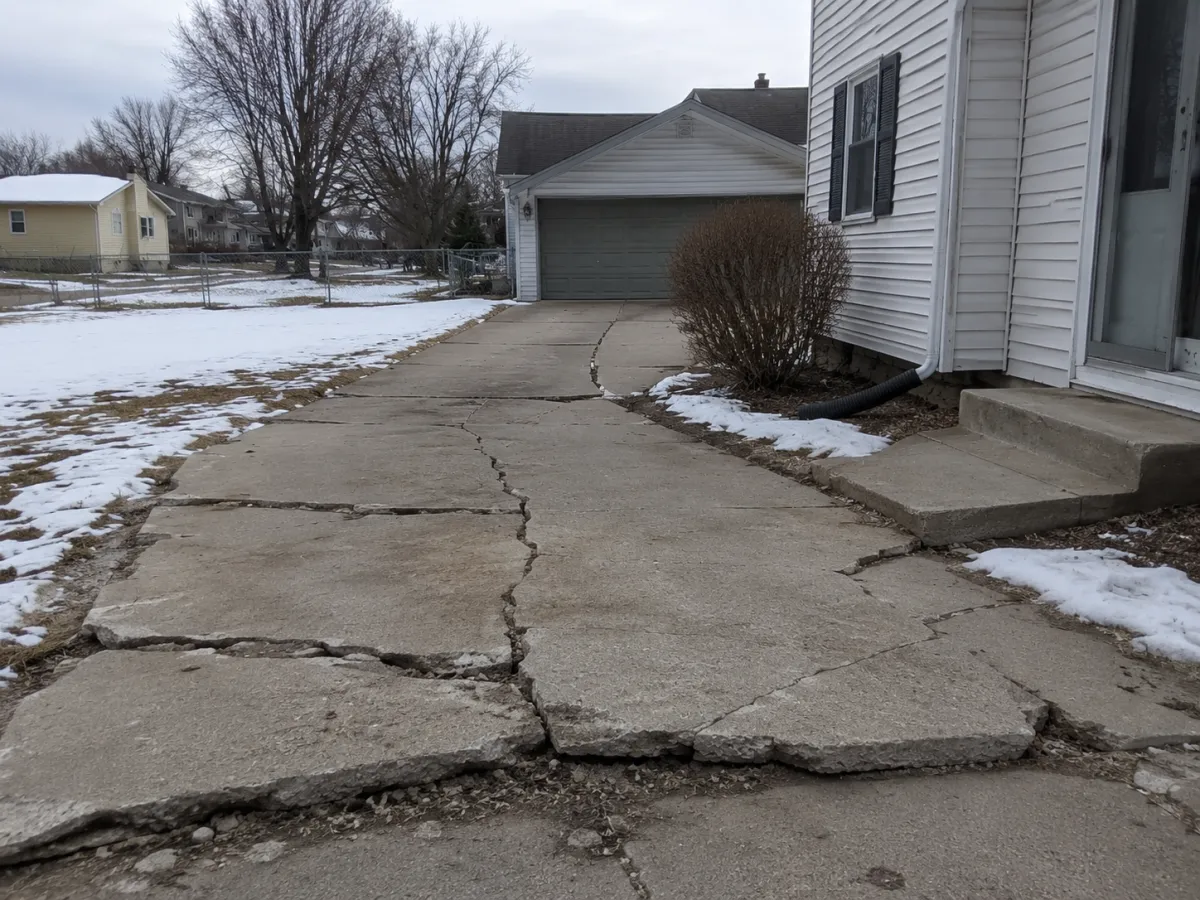
Concrete slab repair starts with figuring out why the slab moved, cracked, settled, or became uneven in the first place. The concrete surface may look like the problem, but the real issue is often below the slab: washed-out soil, poor compaction, unsupported voids, drainage problems, open joints, or long-term settlement.
Some slabs can be lifted and stabilized with concrete leveling, mudjacking, or slab lifting methods. Others may need void filling, joint sealing, drainage correction, surface repair, or full replacement.
The point is not to force every slab into the same repair method. The point is to evaluate the slab condition, the amount of settlement, the visible cracking, the drainage around the area, and whether the existing concrete is still a good repair candidate.
When the slab is mostly intact, repair may help restore safety, improve appearance, reduce trip hazards, and extend the useful life of the existing concrete without jumping straight to replacement.
Common Concrete Slab Problems
Concrete slabs can fail in different ways. Some problems are caused by soil movement beneath the concrete, while others come from water exposure, surface wear, cracking, poor drainage, or long-term deterioration. The repair path depends on whether the slab is mostly intact, how much it has moved, and whether the underlying support problem can be corrected.
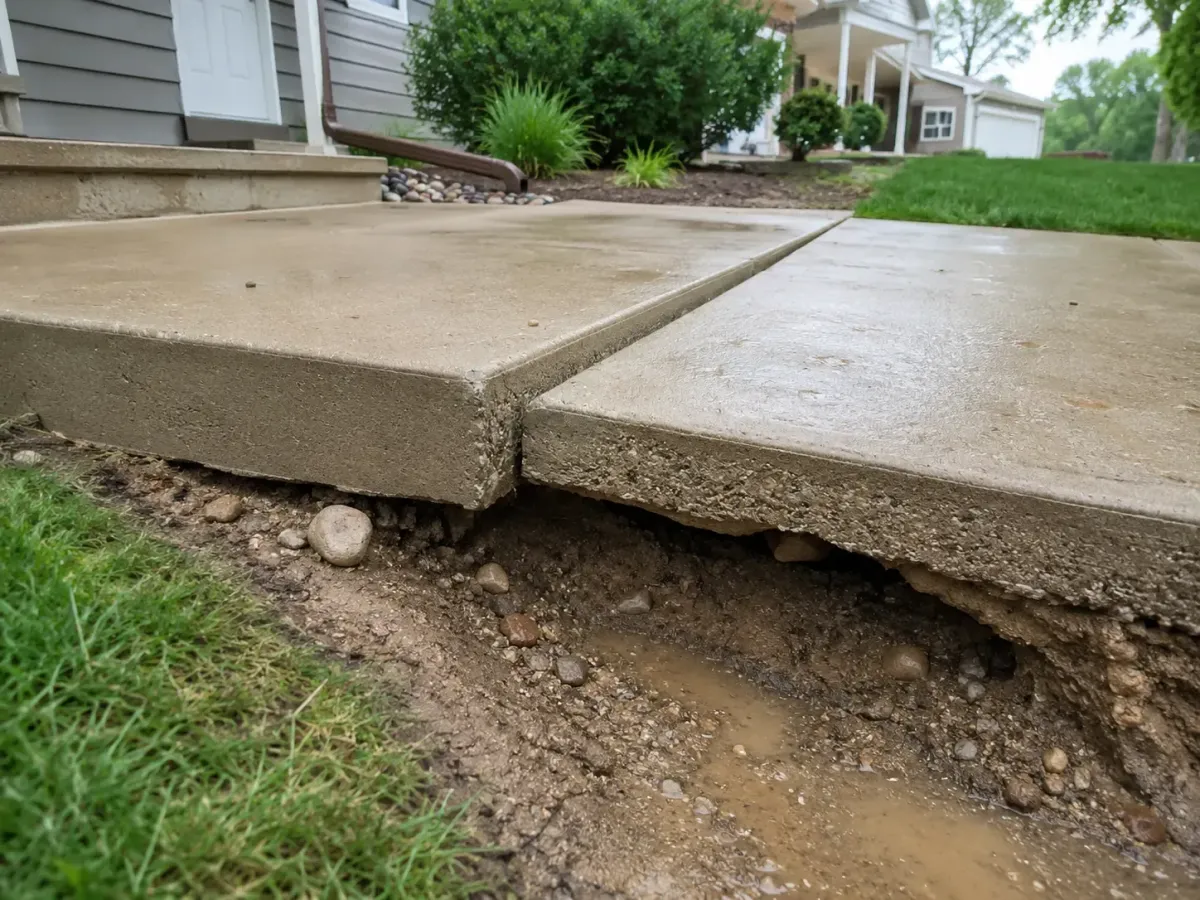
Sunken Slabs
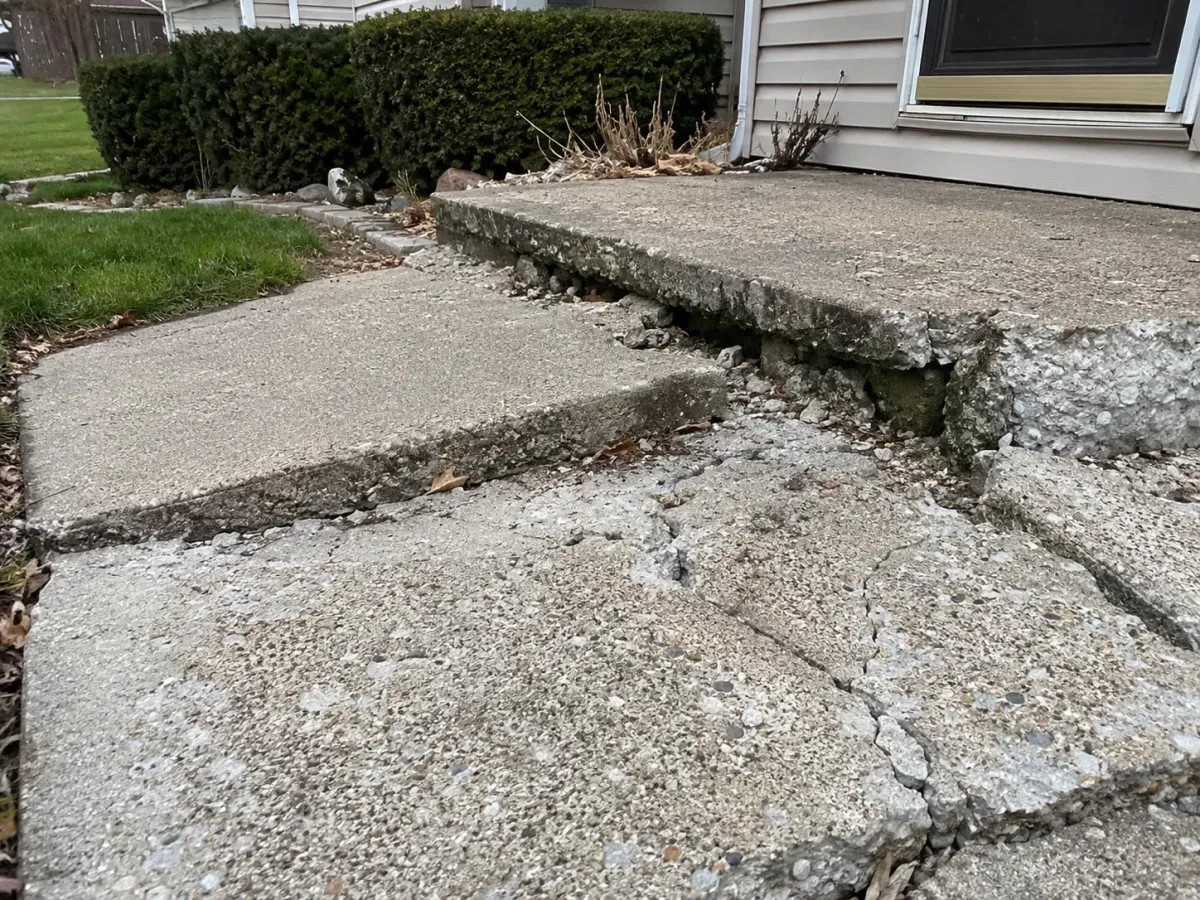
A slab can sink when the base underneath it loses support. Soil washout, poor compaction, snowmelt, water runoff, open joints, and seasonal freeze-thaw movement can leave empty space below the concrete, causing part of the slab to drop.
Uneven Slab Edges
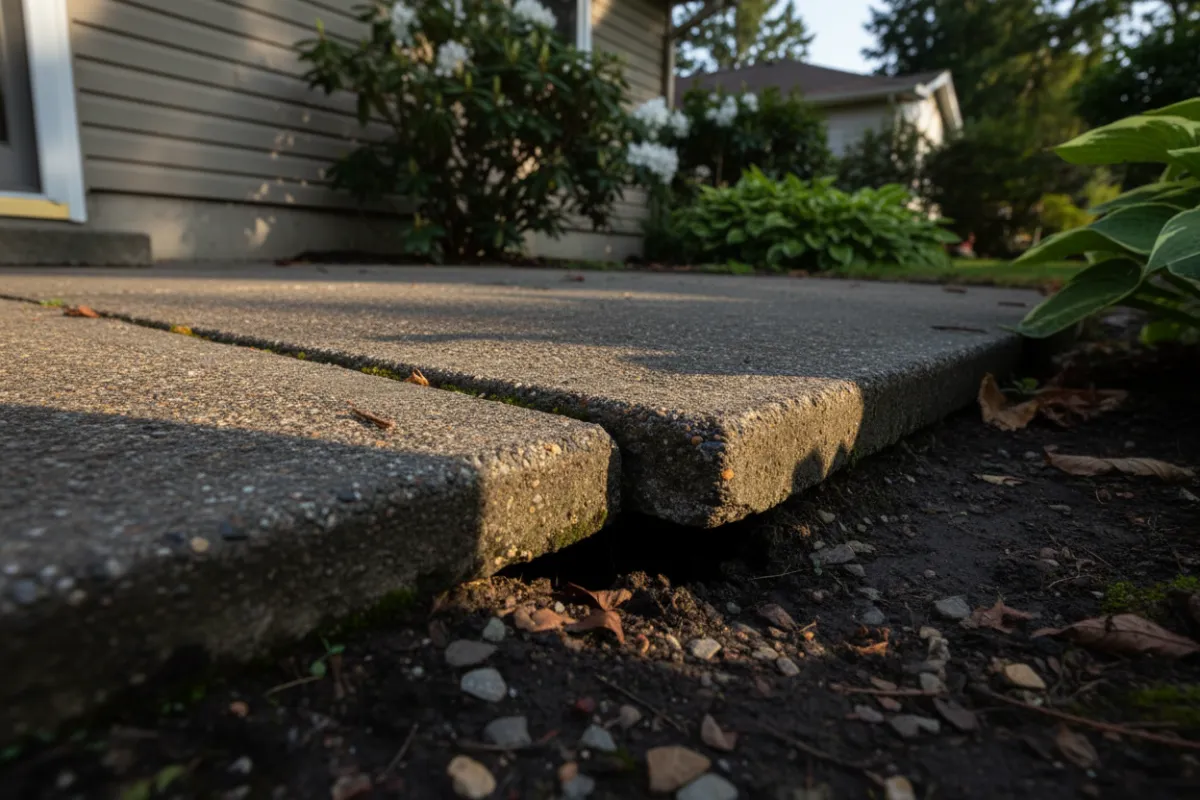
Uneven slab edges can create rough transitions around sidewalks, patios, driveways, garage entries, front steps, stoops, and walkways. These changes can become trip hazards and may worsen if the slab continues to move.
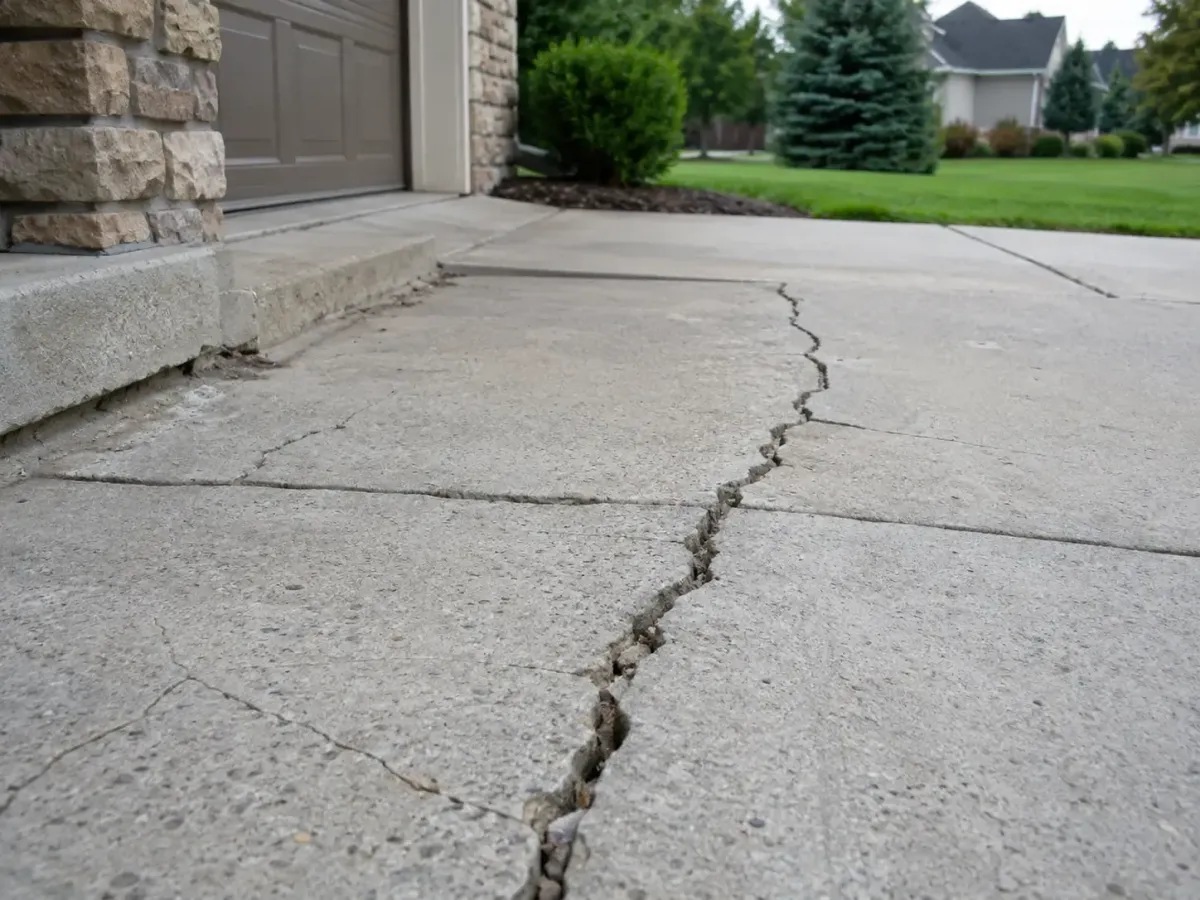
Cracked Concrete Slabs
Cracks may appear when concrete loses support, moves unevenly, or is stressed by water, freeze-thaw movement, settlement, or repeated loading. Small cracks are not always a replacement issue, but larger cracks, broken corners, or heavily fractured sections can limit repair options.
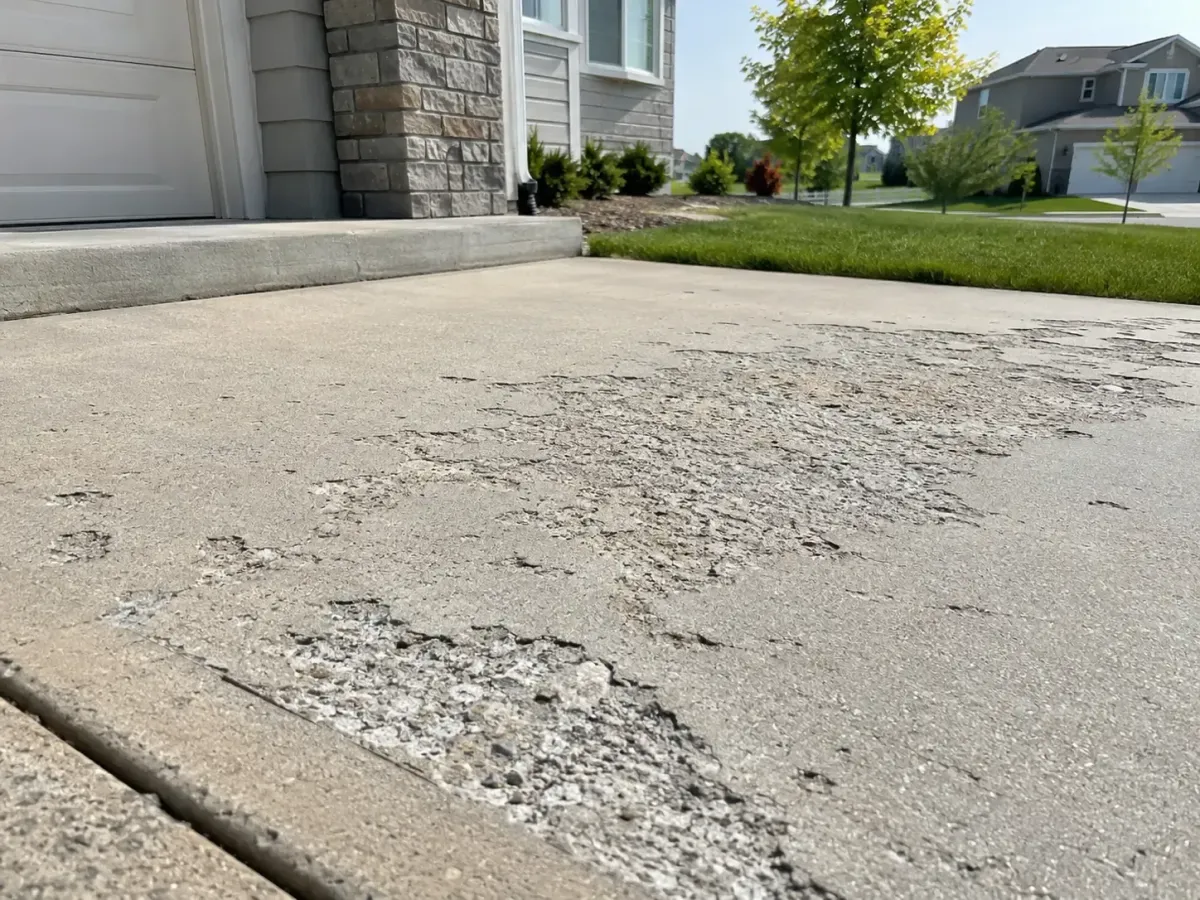
Spalling or Surface Deterioration
Spalling happens when the surface begins flaking, scaling, or breaking apart. If the surface is badly deteriorated, lifting the slab may not solve the visible damage. In those cases, surface repair or replacement may need to be considered.
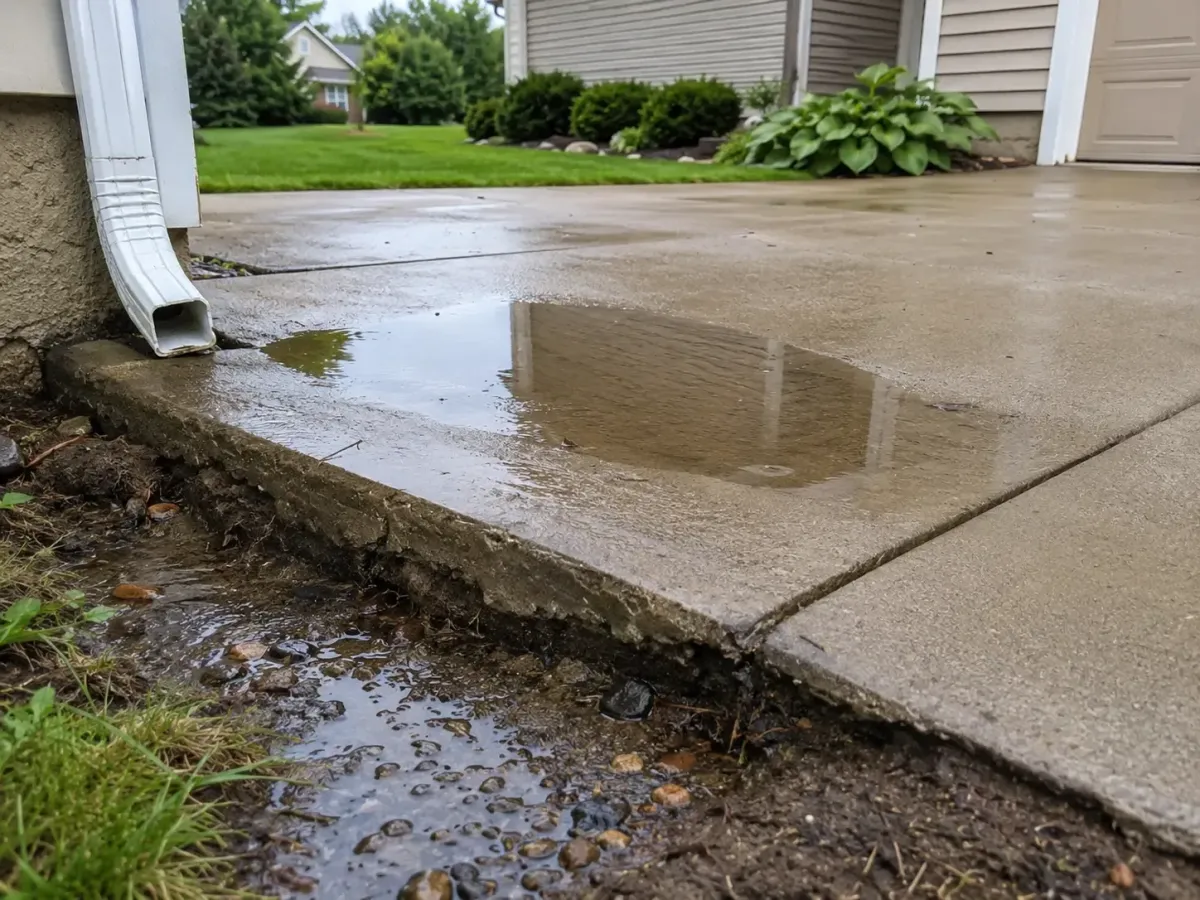
Water Pooling and Drainage Issues
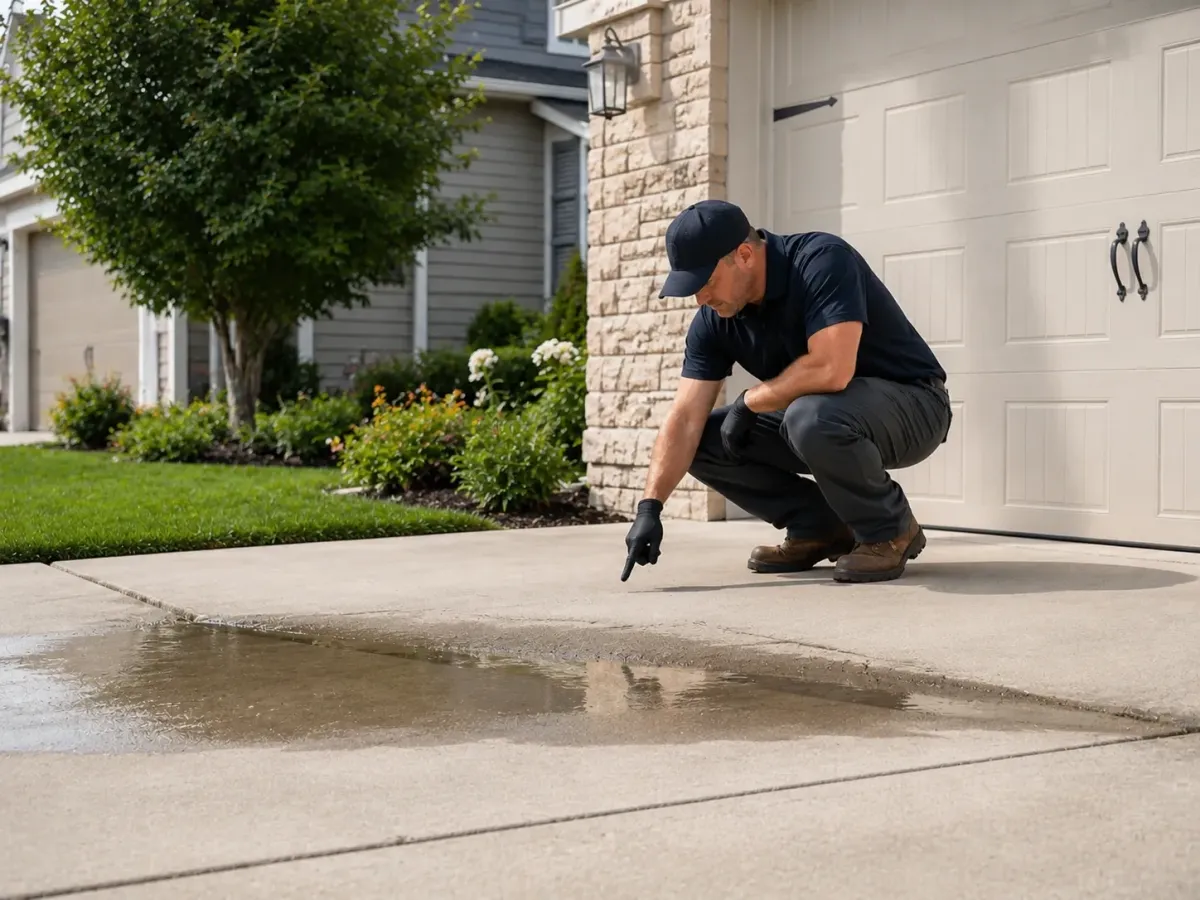
Low spots in concrete can collect water near driveways, patios, garage entries, steps, and walkways. If water keeps moving toward or beneath the slab, the repair plan may need to consider drainage, grading, downspouts, open joints, joint sealing, or runoff paths.
What Your Slab Problem May Be Telling You
A cracked or uneven slab is usually a symptom, not the full diagnosis. The visible problem can point to different repair needs. If the slab is low but mostly intact, concrete lifting or leveling may be worth evaluating.
If there is a hollow space beneath the slab, void filling may be needed to restore support. If water is entering through open joints, joint sealing and drainage correction may need to be part of the plan.
If the surface is badly spalled, crumbling, or broken into unstable sections, replacement may be the better option. This is why slab repair should start with an evaluation instead of a one-size-fits-all recommendation.
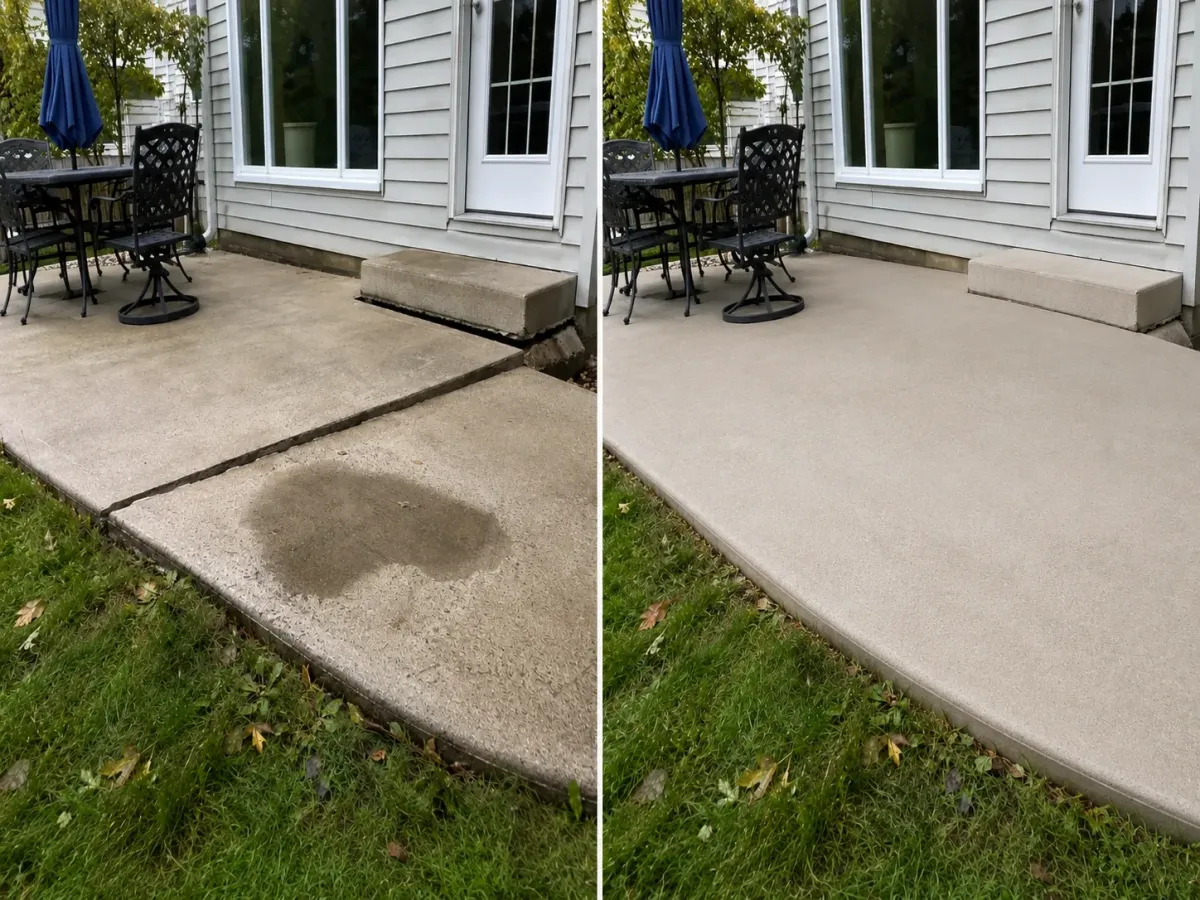
Common Concrete Slab Problems
Concrete slabs can fail in different ways. Some problems are caused by soil movement beneath the concrete, while others come from surface wear, cracking, water movement, or long-term deterioration.
Sunken Slabs
A slab can sink when the base underneath it loses support. Soil washout, poor compaction, water runoff, and seasonal ground movement can leave empty space below the concrete, causing part of the slab to drop.
Uneven Slab Edges
Uneven slab edges can create rough transitions around sidewalks, patios, driveways, garage entries, and walkways. These changes can become trip hazards and may worsen if the slab continues to move.
Cracked Concrete Slabs
Cracks may appear when concrete loses support, moves unevenly, or is stressed by water, freeze-thaw movement, or settlement. Small cracks are not always a replacement issue, but larger cracks can limit repair options.
Spalling or Surface Deterioration
Spalling happens when the surface begins flaking, scaling, or breaking apart. If the surface is badly deteriorated, lifting the slab may not solve the visible damage.
Water Pooling and Drainage Issues
Low spots in concrete can collect water near driveways, patios, garage entries, and walkways. If water keeps moving toward or beneath the slab, the repair plan may need to consider drainage, grading, downspouts, or open joints.
What Causes Concrete Slabs to Settle or Crack?
Concrete slab problems usually start with either the concrete itself, the base beneath it, or the water moving around it. A good repair evaluation should look at the surface condition, the amount of settlement, and the conditions around the slab.
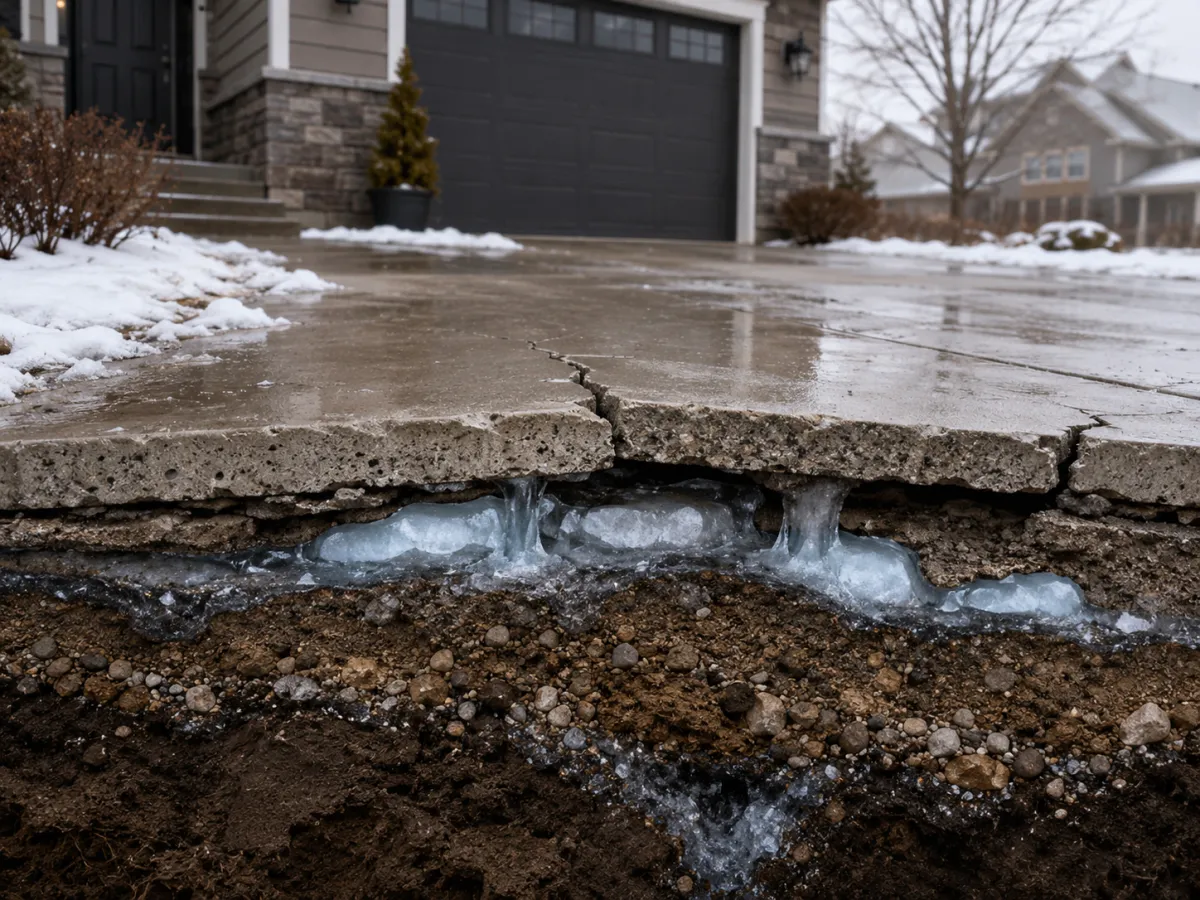
Soil Washout
When water moves beneath concrete, it can carry soil or base material away from the slab. Once the concrete loses support, it may sink into the unsupported area, creating cracks, uneven edges, or low spots.
Poor Compaction
If the base was not compacted evenly before the slab was placed, some areas may settle faster than others. This can leave one side of the slab lower than the surrounding concrete and may create uneven transitions near driveways, sidewalks, patios, steps, and garage entries.
Freeze-Thaw Movement
Moisture around or beneath concrete can expand and contract during Wisconsin freeze-thaw cycles. Repeated movement can contribute to cracks, settlement, surface deterioration, and uneven slab transitions.
Drainage and Downspout Problems
Downspouts, grading issues, and poor drainage can send water toward the slab instead of away from it. Over time, this can contribute to washout, voids, cracks, water pooling, and continued movement.
Open Joints and Water Entry
Open joints between concrete sections can allow rain, snowmelt, and runoff to move below the slab. When water repeatedly enters through these gaps, it can wash away supporting soil or base material and create voids beneath the concrete.
Concrete Slab Repair Options
There is not one repair method for every slab. The best option depends on whether the concrete is mostly intact, how much it has settled, whether voids exist below it, whether water is still moving around it, and whether the surface itself is still repairable.
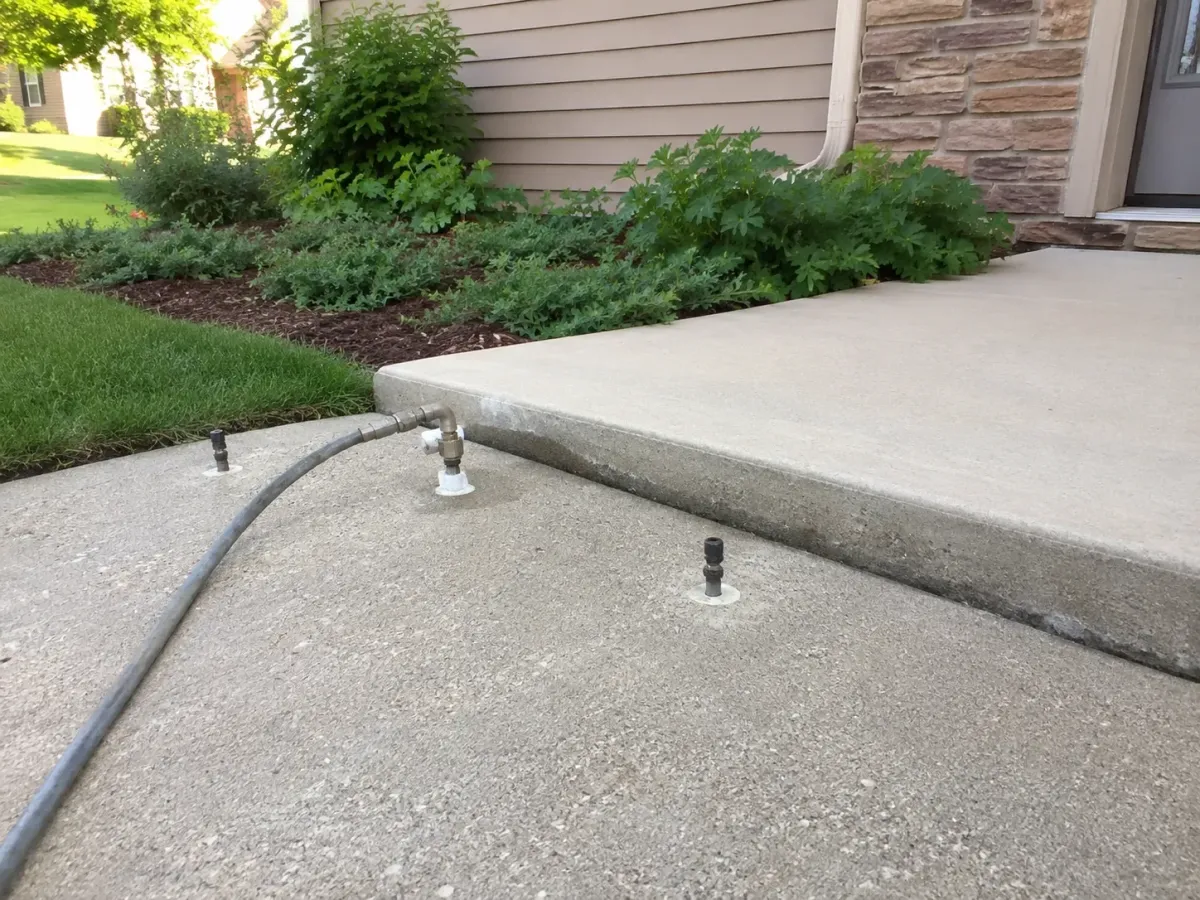
Concrete leveling may be used when the slab has settled but is still mostly intact. The goal is to restore a safer, more even, more usable surface without tearing out concrete too early.
Mudjacking is one method of raising settled concrete by placing material beneath the slab. It can help fill voids, improve support, and lift sunken sections where the concrete is still a good repair candidate.
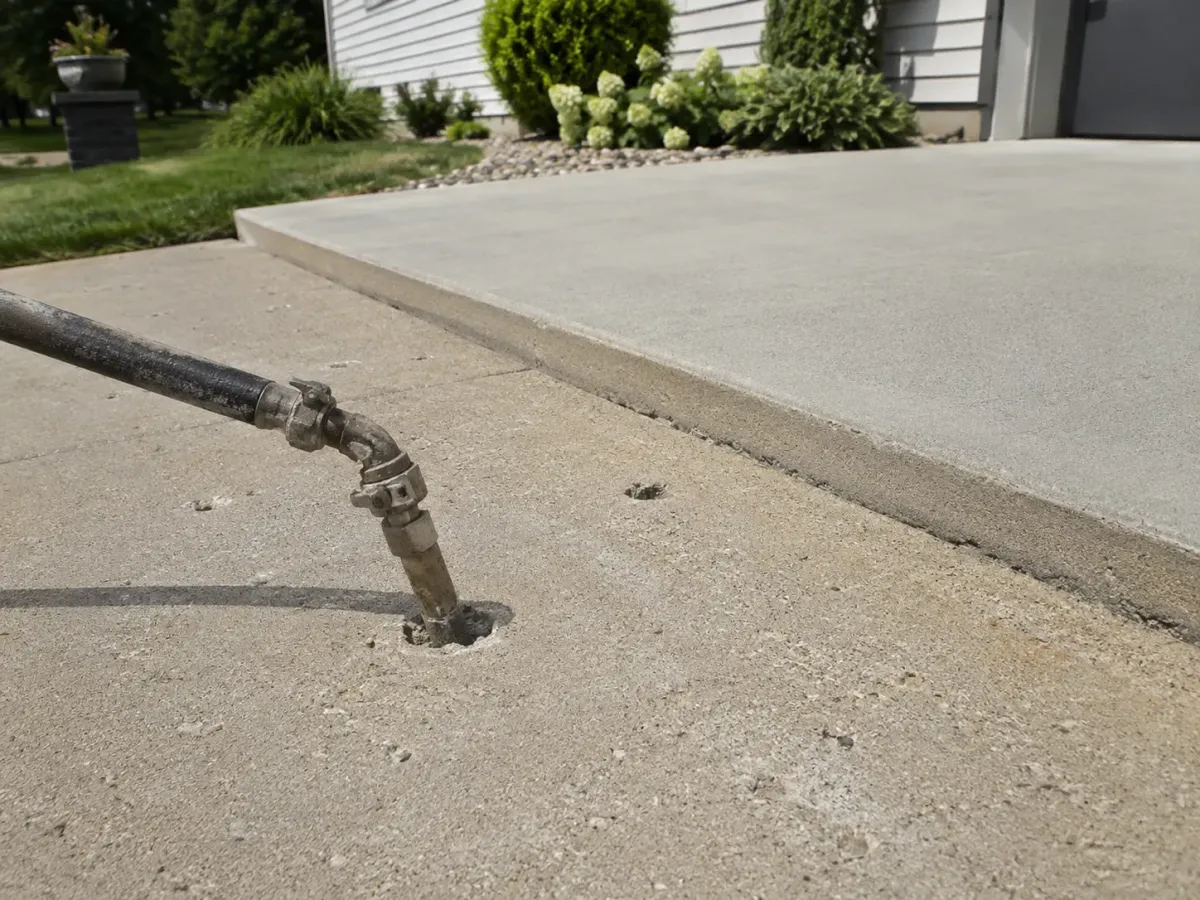
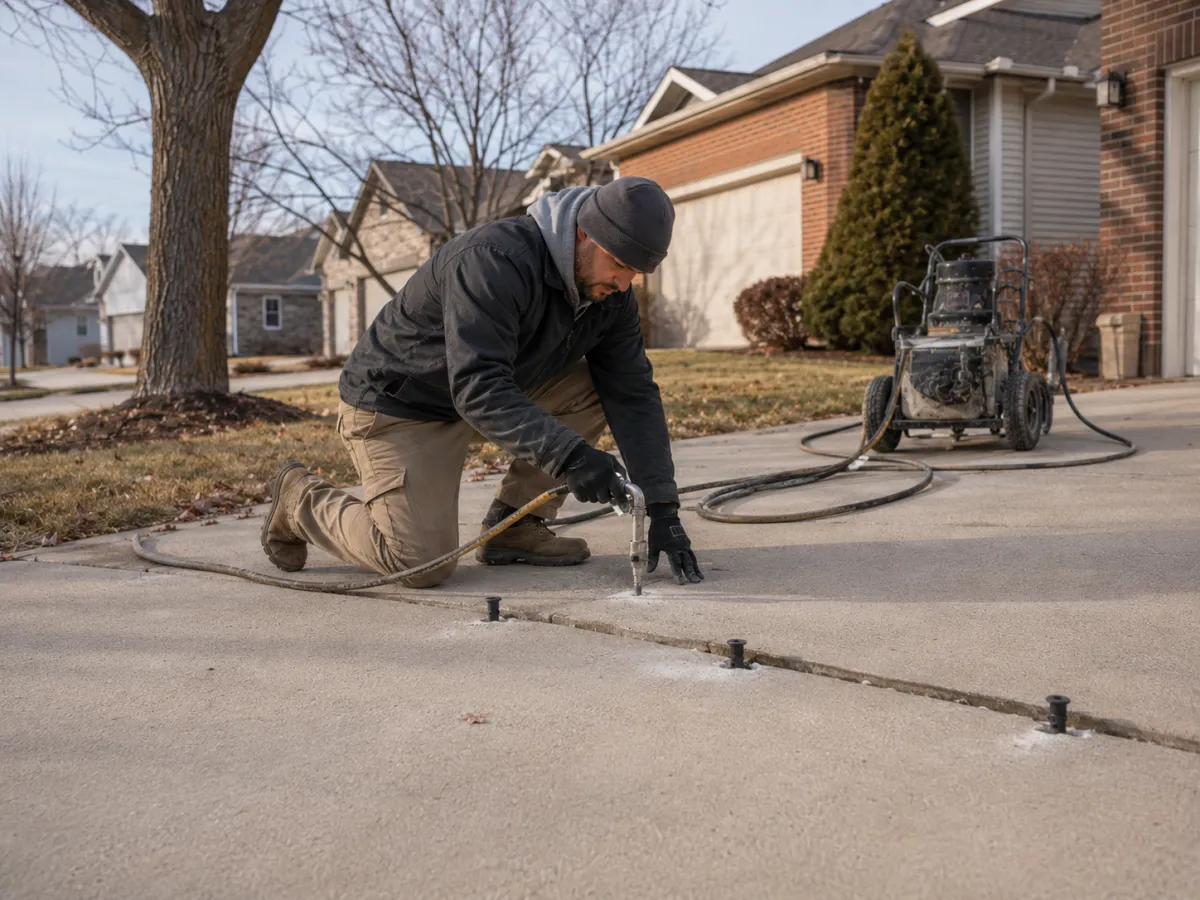
Concrete lifting is a broad term for raising or stabilizing sunken concrete by restoring support beneath the slab. It may describe mudjacking, foam lifting, slabjacking, or other methods used to raise settled concrete.
Joint Sealing or Slab Surface Repair
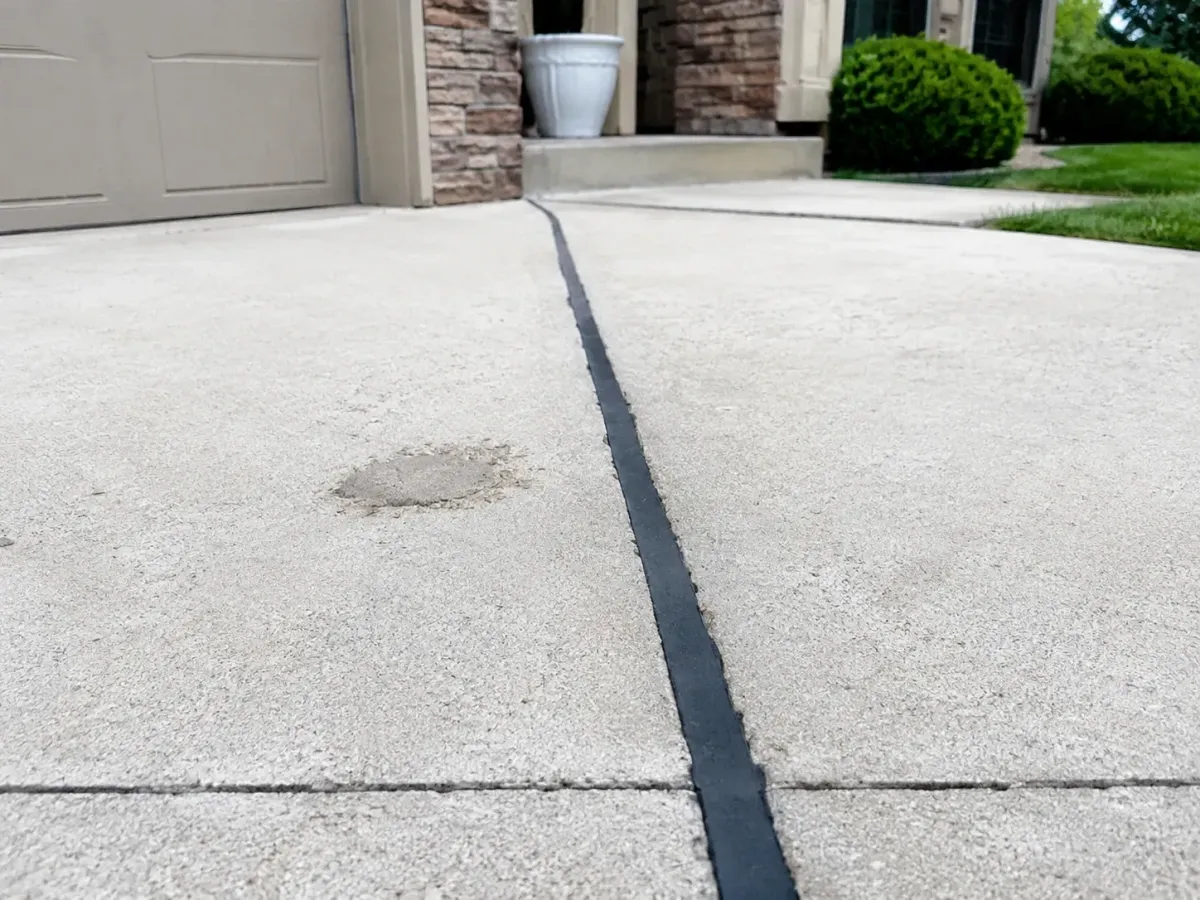
If water is entering open joints or surface cracks, joint sealing may help reduce moisture movement below the slab. Surface repair may also be needed when the top layer of concrete has minor cracking, flaking, or scaling.
Slab Replacement
Replacement may be the better choice when the slab is severely broken, crumbling, badly spalled, unstable, heavily fractured, or no longer structurally sound.
Early slab repair can help reduce safety concerns, improve usability, and prevent smaller concrete problems from becoming larger repair or replacement projects later.
When Slab Repair Makes Sense
Slab repair may be a good fit when the concrete is still mostly intact, but part of the slab has settled, cracked, separated, or lost support underneath.
Slab repair may help when:
The slab has dropped but is not shattered
There are uneven edges between concrete sections
A sidewalk, patio, or driveway panel has become a trip hazard
Water is pooling because one section has settled
A garage entry or driveway apron has sunk
Front steps or stoops have shifted
There are visible gaps or voids beneath the slab
The homeowner wants to avoid unnecessary demolition
The repair goal is to make the slab safer, more usable, and better supported without replacing concrete that may still be repairable.
When Replacement May Be Better
Concrete slab repair is not the right answer for every slab. If the concrete is badly cracked, broken into unstable sections, heavily spalled, crumbling, or no longer structurally sound, replacement may be the better long-term option.
Slab repair may help when:
The slab is severely cracked or fractured
The surface is crumbling or badly spalle
Multiple sections are broken apart
The slab rocks or moves under load
The slope was poured incorrectly from the start
The concrete no longer has enough strength to lift safely
The repair goal is to make the slab safer, more usable, and better supported without replacing concrete that may still be repairable.
Concrete Slab Repair FAQs
Common questions about concrete slab repair, sunken slabs, cracked concrete, uneven slab edges, void filling, concrete leveling, mudjacking, and repair versus replacement in Madison.
Can a sunken concrete slab be repaired without replacement?
Yes. Many sunken or uneven concrete slabs can be lifted, leveled, stabilized, or supported without full demolition or replacement. The best option depends on the condition of the slab, the amount of settlement, whether voids exist below it, and whether the concrete is still structurally sound enough to repair.
What causes concrete slabs to sink or crack in Madison?
Concrete slabs in Madison can sink or crack because of freeze-thaw cycles, snowmelt, water runoff, soil movement, poor compaction, erosion, open joints, downspout discharge, tree root pressure, and long-term settlement beneath the slab.
Can uneven concrete slabs become trip hazards?
Yes. Uneven concrete slabs can create trip hazards around sidewalks, driveways, patios, entryways, steps, walkways, and garage entrances. Repairing them early may help improve safety and make the surface easier to use.
Is slab repair cheaper than replacement?
In many cases, slab repair, concrete leveling, mudjacking, and void filling may be more affordable and less disruptive than replacing entire slabs. Replacement may still be needed when the concrete is severely broken, crumbling, unstable, or structurally compromised.
What types of slabs can be repaired?
Driveway slabs, sidewalk sections, patio slabs, walkways, garage entries, steps, stoops, garage slabs, and entry slabs can often be repaired depending on their condition and the cause of the settlement.
What are voids under a concrete slab?
Voids are empty or unsupported spaces beneath a concrete slab. They can form when soil washes out, compacts unevenly, decays, or moves over time. Voids can cause a slab to sink, crack, rock, or create uneven edges.
Can a cracked slab be lifted?
Sometimes. A cracked slab may still be a repair candidate if the concrete is mostly intact and the main problem is settlement or support loss beneath the slab. If the slab is badly fractured, crumbling, or unstable, replacement may be a better option.
Will slab repair fix water pooling?
It may help when water pools because one section of concrete has settled and created a low spot. However, slab repair does not automatically fix drainage, grading, downspouts, runoff paths, or open joints. Those conditions may need to be reviewed separately.
What repair options are used for concrete slabs?
Concrete slab repair may include concrete lifting, concrete leveling, mudjacking, void filling, joint sealing, drainage correction, surface repair, or replacement depending on the condition of the slab.
When should a concrete slab be replaced instead of repaired?
Replacement may be better when the slab is severely cracked, crumbling, badly spalled, unstable, heavily fractured, or no longer structurally sound. A repair evaluation should help determine whether the slab can be saved or should be replaced.
Need help with a cracked, sunken, or uneven concrete slab in Madison?
Request a free slab repair evaluation before assuming the concrete needs to be replaced.
Lift, Level, Lasting Results.
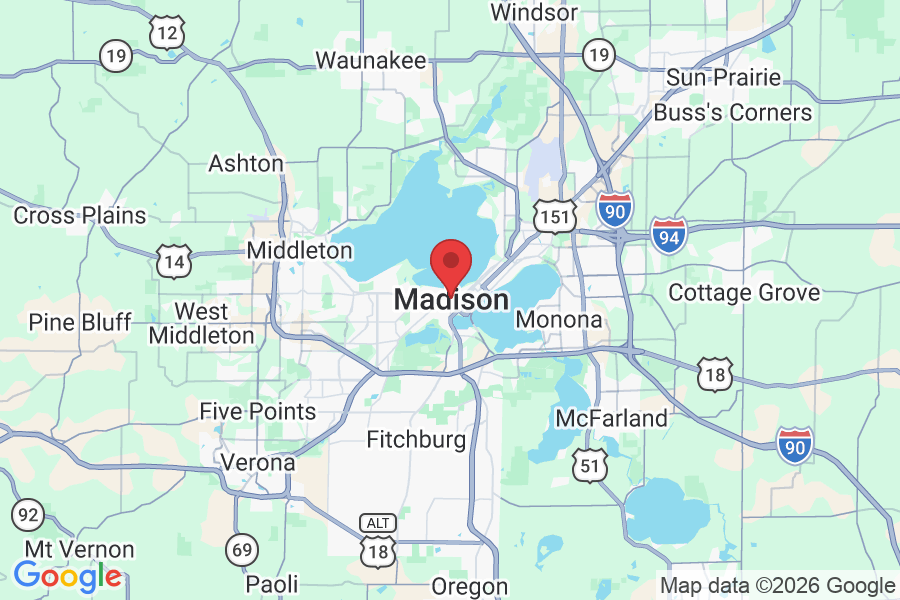
Serving Madison, Middleton, Fitchburg,
Sun Prairie, Verona, Waunakee, Monona,
McFarland, DeForest, Stoughton, Oregon,
Cottage Grove, and most of Dane County.